


A large family from Fellheim in the Allgäu

Bene16, CC BY-SA 3.0 https://creativecommons.org/licenses/by-sa/3.0, via Wikimedia Commons
Fellheim in the Allgäu. A small town on the trade route between Ulm and Memmingen. Jakob Rosenthal is born here in 1854, the youngest of nine children in a Jewish family. His mother, Dorlene, is the daughter of Fellheim butcher Samuel Bacharach.

Wald-Burger8, CC BY-SA 4.0 , via Wikimedia Commons
His father, Joseph Rosenthal, trades in antiques, old books and prints. He is cosmopolitan, open-minded and assertive - character traits that benefit him in business, but also in his voluntary work in the Jewish community. There has been a Jewish community in Fellheim since 1670, but it becomes increasingly impoverished in the 19th century due to discriminatory laws. This is also evident in the synagogue, which becomes increasingly dilapidated. Joseph Rosenthal campaigns for its preservation. He succeeds in raising the enormous sum of 2,000 guilders for the renovation - mainly through donations from relatives and Jewish communities in the USA.

Thomas Mirtsch, CC BY-SA 3.0, https://creativecommons.org/licenses/by-sa/3.0, via Wikimedia Commons
His children's education is extremely important to Joseph. He sends his son Ludwig to Buxheim Monastery three times a week to learn English. The boy covers the ten-kilometre distance on foot, whatever the season.

Munich City Archive, DE-1992-NL-ROS-0472-03
In 1858, the family suffers a an unexpected tragedy: their mother Dorlene dies unexpectedly at the age of 44. She is laid to rest in the Jewish cemetery in Fellheim. Jakob is only four years old when he becomes a half-orphan.
Now there is nothing keeping Joseph Rosenthal in Fellheim. He, who travels a lot for work and has many interests, is drawn to Munich. Since the middle of the century, the royal seat has developed into a centre for art and science. Here, Joseph Rosenthal can count on a large clientele for his antiques, art and book trade.

Georg Böttger - Public domain
His son Ludwig, who is now a qualified bookseller and antiquarian bookseller, also wants to settle in Munich.
After the last immigration restrictions for Jews were lifted in 1861, this goal is finally within reach. Ludwig realises his dream: he establishes the „Rosenthal Antiquarian Bookshop“ in the heart of Munich, on Promenadeplatz.
While Ludwig had to walk from Fellheim to Buxheim to receive English lessons, Jakob enjoys the privilege of being taught French, English and „etiquette“ by a private tutor. After training in his brother's antiquarian bookshop, he receives the finishing touches in antiquarian bookshops in Heidelberg and Karlsruhe. He then returns to Munich and becomes a partner in the „Rosenthal Antiquariat“.
Jacob becomes Jacques

Munich City Museum, DE-1992-NL-ROS-0472-01
In 1878, Ludwig sends his brother to Paris for an extended period of time. Alongside London, Paris is the most important European trading centre for valuable and rare books. But Paris is not only interesting as a market; the scientific study of manuscripts and early printed works has also developed at the universities and libraries. And of course it is a special experience to be in Paris during the Belle Époque. Jacob educates himself, makes contacts - and falls in love with the city on the Seine, so much so that from then on he no longer calls himself Jacob, but Jacques.

The British Library, No restrictions, via Wikimedia Commons
Thanks to his curiosity and instinct, Jacques manages to make many a spectacular purchase in Paris. The Rosenthal brothers' antiquarian bookshop quickly gains an excellent reputation. Academic institutions and libraries, private individuals and government circles all buy from the Rosenthals. Their most prominent customers include King Ludwig II of Bavaria and Emperor Wilhelm I.

Munich City Archives, DE-1992-NL-ROS-0472-16

Munich City Archive, DE-1992-NL-ROS-0472-27
In 1882, Jacques marries 25-year-old Emma Guggenheimer. The bride comes from a respected Munich family. Daughter Theodora is born in 1884, son Erwin in 1889.
Munich - centre of the art and antiques trade

Stadtarchiv München, DE-1992-FS-PK-STR-00231🔍 Move the mouse over the image to enlarge it
he Rosenthal brothers' company grows and grows. Their stock comprises an incredible 800,000 volumes. The Rosenthals decide to split up. Jacques opens his own antiquarian bookshop in 1895.
At the turn of the century, Munich was a centre of the European art and antiques trade. Most of the shops are located in the area between Odeonsplatz, Lenbachplatz and Karolinenplatz, in magnificent buildings reminiscent of museums or palaces. Jacques Rosenthal also errects a prestigious residential and commercial building here, in the „antiquarian mile“. In Brienner Straße 47 (today: 26), opposite the art house of Julius Böhler, who is a collegial friend of Rosenthal's.

Munich City Archives, DE-1992-NL-ROS-0472-38
Jacques leaves the planning and furnishing to his son Erwin. He may only be twenty, but he already knows a lot about the business. He is studying art history and completing his doctorate.

Munich City Archives, DE-1992-NL-ROS-0472-30
It will be a very special house that radiates opulence, taste and learnedness. From the street, you enter a large exhibition hall with walls covered in blue textile wallpaper. An adjoining room is designed like a chapel, with a three-winged altar in an imitation apse. Tasteful showcases display valuable books and works of art behind glass, precious carpets lie on the floors and antique globes are displayed on tables.

Munich City Archive, DE-1992-NL-ROS-0473-02

Munich City Archive, DE-1992-NL-ROS-0472-42

Munich City Archive, DE-1992-NL-ROS-0472-43
Good years for the Rosenthal family
Erwin marries Margherita Olschki in 1912. She is the daughter of Leo Olschki, a close friend of the Rosenthals. Jacques and Emma soon enjoy having five grandchildren.
After completing his doctorate, Erwin becomes a junior partner in his father's company. He publishes his own academic series: „Contributions to research. Studies and communications from the antiquarian bookshop Jacques Rosenthal Munich“. The antiquarian bookshop also gains an international reputation and establishes branches in Berlin and Switzerland.
Boycott and displacement of Jewish businesses

USHMM, Public domain, via Wikimedia Commons
But the global economic crisis of 1929 hits the antiquarian book trade hard. Markets collapse, sales fall and an uncomfortable silence prevails in the shops. Then the National Socialists come to power. On 1 April 1933, their boycott of Jewish businesses also hits the antiquarian bookshop, which had opened an exhibition of medieval manuscripts on the same day. SA guards stand in front of the main entrance and try to prevent interested parties from entering the exhibition rooms.
At the end of August 1935, the Reich Chamber of Culture bans Jewish art dealers from practising their profession and forces them to wind up their businesses within four weeks. Erwin Rosenthal protests against this in a letter dated 2 September 1935:
„I am pained that you deny me personal professional reliability. I belong to a family in which my involvement with antiquarian bookselling has been hereditary for almost 100 years... a liquidation within four weeks would mean that I would simply have to sell off my stock of around 500,000 volumes, including around 4,000 15th century prints and hundreds of medieval manuscripts.“

Munich City Archive, DE-1992-FS-NS-01790
Erwin Rosenthal only gains a reprieve as a result. He sells the house and the company. Various NSDAP organisations are interested in the prestigious company headquarters, as the entire area around Königsplatz is restructured by the National Socialists into a party quarter. The German Labour Front (Deutsche Arbeitsfront or DAF) and the party organisation "Strength through Joy“ ("Kraft durch Freude") move into the rooms formerly dedicated to art and science.
A life's work in ruins

Munich City Archive, DE-1992-FS-STB-5114
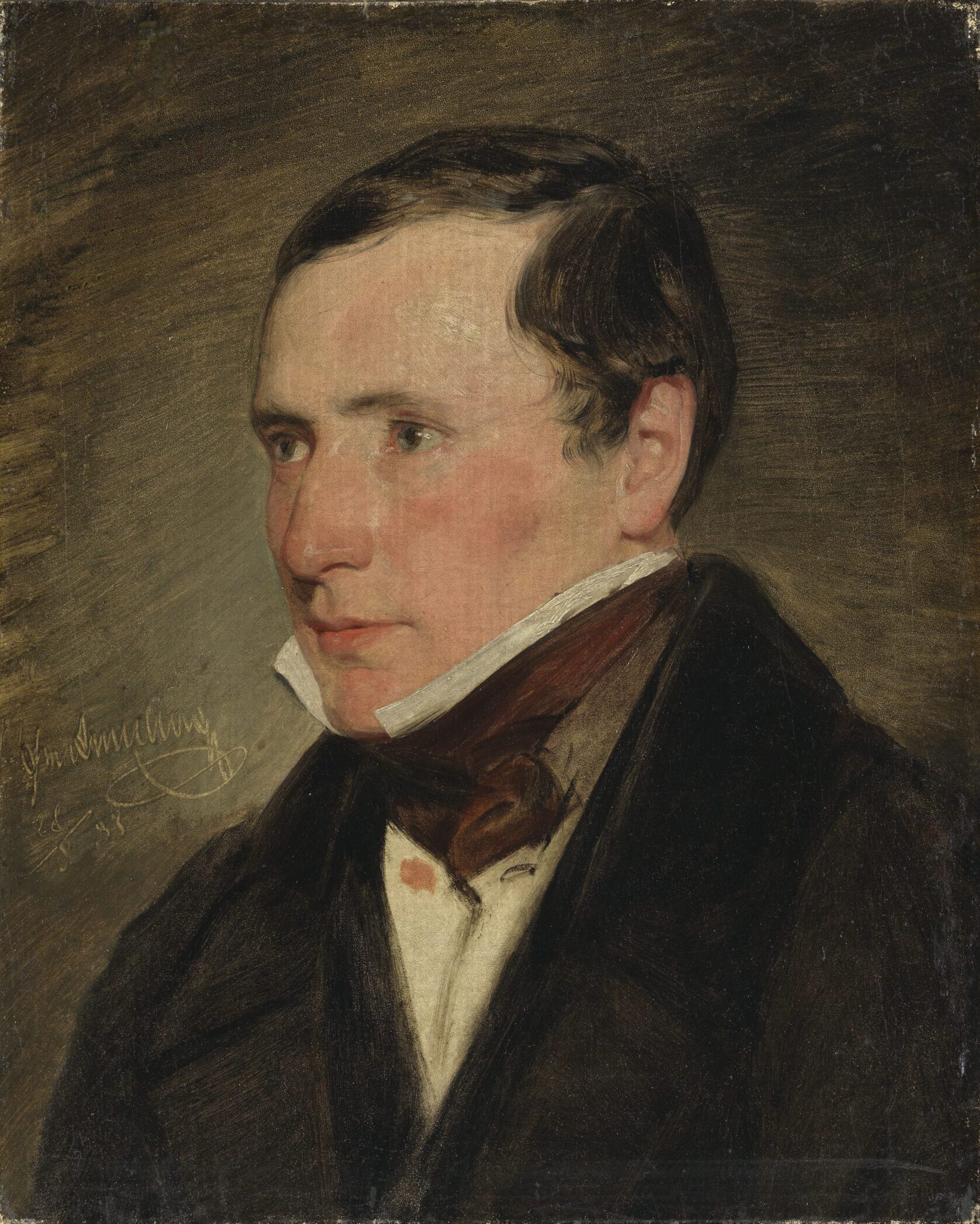
Jacques and Emma move into the nearby Regina Palace Hotel on Maximiliansplatz. Both are no longer in good health and are reluctant to emigrate. Their life's work lies in ruins: The company and the house are lost, the furniture has to be sold off and numerous works of art, including the painting by Friedrich von Amerling, are taken into consignment at the Julius Böhler auction house.

Bayerischer Rundfunk
Two years later, on 5 October 1937, Jacques Rosenthal dies in the hotel. His death goes largely unnoticed, with only a few mourners paying their last respects at the Jewish cemetery in Munich.

Stadtarchiv München, DE-1992-KKD-3446🔍 Move the mouse over the image to enlarge it
rwin and his wife manage to take their children to safety abroad before emigrating themselves. Emma Rosenthal, however, stays at Maximiliansplatz. She is in need of care and cannot imagine moving abroad,despite all the reprisals against the Jewish population. She has to have a new identity card issued, on which she signs her middle name "Sara", as prescribed by the regime. She experiences the horror of the November pogrom and is forced to hand over her silverware to the municipal pawn office. When she decides to flee to Switzerland in 1939, she endures a lot of harassment from the tax office and has to pay high taxes. She was only allowed to leave at the end of the year. Emma Rosenthal dies in Küssnacht, Switzerland, in 1941.
Restitution of the "Portrait of a Young Man"
Bayerische Staatsgemäldesammlungen
As part of provenance research at the Bavarian State Painting Collections, the painting "Portrait of a Young Man" is examined decades later. It turns out that the painting entered the collection in 1936. The art dealer Julius Böhler had offered it to General Director Buchner as part of a larger exchange with other paintings. When Emma Rosenthal enquired about the proceeds, she was told that the painting had not fetched as much as she had hoped, namely only 350 Reichsmarks.
As it is suspected that the Rosenthals did not receive an appropriate purchase price for the painting and that their emergency situation was exploited, the provenance researchers entered the work into the Lost Art Database in 2020. This establishes contact with the descendants. The painting is restituted to its rightful owners in 2025.





