


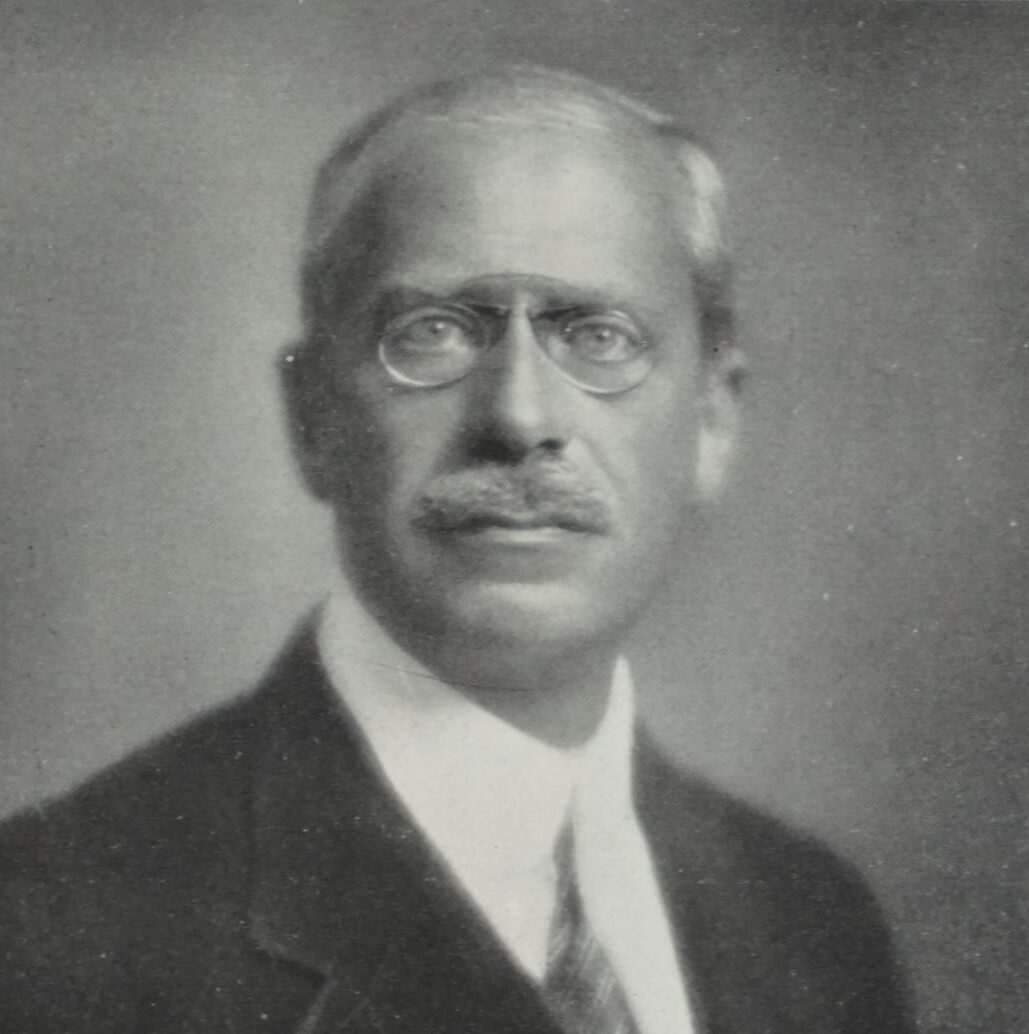
A fairytale ascent
Public domain, via Wikimedia Commons
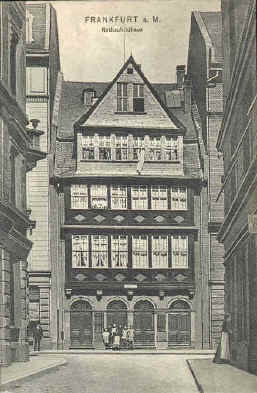
The Rothschilds. From Frankfurt's Judengasse, where the founder of the dynasty, Mayer Amschel Rothschild (1744-1812), ran a small business, to the highest heights of the international social elite, the family achieved a dizzying rise within a very short space of time, causing a sensation, the creation of legends and envy.

Public domain, via Wikimedia Commons
The Rothschild Bank's head office is in Frankfurt, but at the beginning of the 19th century, four Rothschild brothers set up business in Europe's leading financial centres - London, Paris, Vienna and Naples. They trade in securities and finance major government undertakings - railway construction, troop salaries for the British military, the Suez Canal, to name just a few examples.
Salomon Rothschild founds the Austrian branch in 1820 and quickly becomes Austria's leading financial entrepreneur.
Commitment to Judaism

Public domain, via Wikimedia Commons
The Rothschilds feel very attached to their faith, and conversion is out of the question for them. They are committed to improving the living conditions of Jews, not only in their hometown of Frankfurt or in the countries they do business, but also in other countries such as Romania or Syria. They donate part of their assets to charitable organisations. The Israelite Hospital, the Institute for the Blind and the Deaf-Mute Centre are established with their support.
Alphonse von Rothschild, lawyer, philatelist, art lover and family man

Public domain, via Wikimedia Commons
One of Solomon's great-grandsons is Alphonse Mayer von Rothschild, born in 1878. He has four brothers, of whom Louis Nathaniel, who is two years younger, takes over the banking business. In the Austrian branch of the Rothschild family, it is customary for responsibility for the banking house not to be divided up, but to be transferred to a single heir. Alphonse is therefore free to pursue his passions. He studies law, but never practises the profession. He loves classical literature and art and owns a famous stamp collection. In Vienna, he resides in a city palace in Theresianumgasse.

Edith Barakovich, Public domain, via Wikimedia commons.
In 1912, Alphonse marries the Englishwoman Clarice Sebag-Montefiore. The couple only has two years together before the First World War breaks out and Alphonse is sent to the Eastern Front. He is deployed until September 1918, almost the entire duration of the war. He is honoured with the Imperial Ottoman War Medal for his services.
Public domain, via Wikimedia Commons
The Rothschilds have three children. Their son Albert Anselm Salomon Nimrod is born in 1922. This is followed by daughter Bettina Jemima in 1924 and finally Gwendoline Charlotte in 1927.
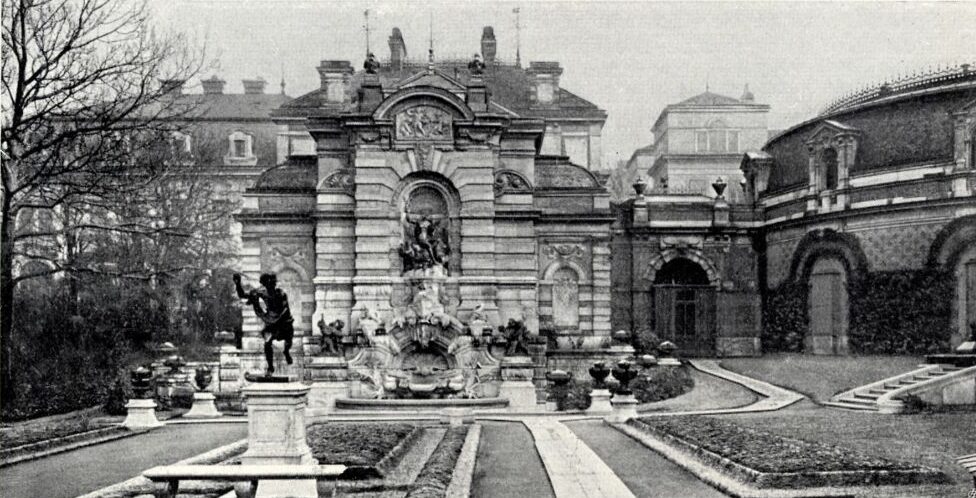
Alphonse continues the family tradition of supporting charitable causes. He is President of the Nathaniel Freiherr von Rothschild Foundation for the Mentally Ill in Vienna. And together with his wife Clarice, he continues the family tradition of collecting art. He expands the inherited collection and even builds a side wing to the palace in Theresianumgasse.

Bavarian State Painting Collections, on permanent loan from HypoVereinsbank, Member of UniCredit.
Through inheritance, the famous painting of Madame de Pompadour comes into his possession. The Rothschild family loves the culture of the French royal court of the 18th century, and many family members collect furniture, tapestries and Rococo paintings. The French branch of the Rothschild family also owns a portrait of Madame de Pompadour, a replica by François Boucher, which at first glance appears to be identical.

Austrian National Library Vienna, PLA16317496
The global economic crisis also affects the Rotschilds. Ironically, this is when the myth of the family's power reaches its peak and it becomes the target of hate propaganda from radicals across the political spectrum in Germany and Austria.
Hitler's object of hate

Georg Fayer, Public domain, via Wikimedia Commons
Hatred of the Rothschilds had been part of the NSDAP's rhetoric since its beginnings, with Adolf Hitler spreading his conspiracy theories about them as early as 1921 in the „Völkischer Beobachter“. After coming to power, this hatred is translated into action. The Frankfurt family must flee for their lives.
Alarmed by the events in his neighbouring country, Alphonse von Rothschild tries to take his art collection abroad. This is difficult due to the Export Prohibition Act passed in 1918, but at the beginning of 1938 he reaches an agreement with the monument protection authority. However, Hitler then seizes power in Austria as well. Immediately after the invasion of German troops on 12 March 1938, the displacement and persecution of the Jewish population and the looting of the important Jewish art collections in Vienna begins. As the Rothschilds are so prominent, they are among the first to be affected. The day after the invasion, the SS are already looking for members of the family. Louis von Rothschild is arrested and taken to prison. His possessions and his companies are seized from him.
The art collections are plundered

Austrian National Library Vienna, 222.988-B
But what the National Socialists are mainly after are the Rothschilds' art treasures.
On 14 March 1938, the palace of Alphonse and Clarice von Rothschild is sealed, the works of art are confiscated by the Gestapo and taken to the depot of the Kunsthistorisches Museum in the Hofburg. Among them is the famous portrait of Madame de Pompadour.
Before the Anschluss, the directors and employees of the Kunsthistorisches Museum were on friendly terms with the Rothschilds, advised them on the development of their collection and received financial support from the Rothschilds. Now the museum staff use their knowledge of the Rothschild collections to support the confiscation campaign.

Walter-Frentz-Collection, Berlin
The spoils are distributed
A months-long battle for the prey begins. Heinrich Himmler wants to take all of the artworks to Berlin or Munich. This plan fails due to the vehement resistance of the Viennese cultural administration. The National Socialists do not want to alienate the „Ostmark“ and the capital Vienna too much after all, which is why the majority of the looted art remains in Austria. Hitler's planned Führer Museum in Linz is to be presented with particularly representative pieces. The remaining artefacts will be offered to Austrian museums, who will be allowed to register their „desired objects“.
Federal Archives, Image 146-1994-006-28A / CC-BY-SA 3.0
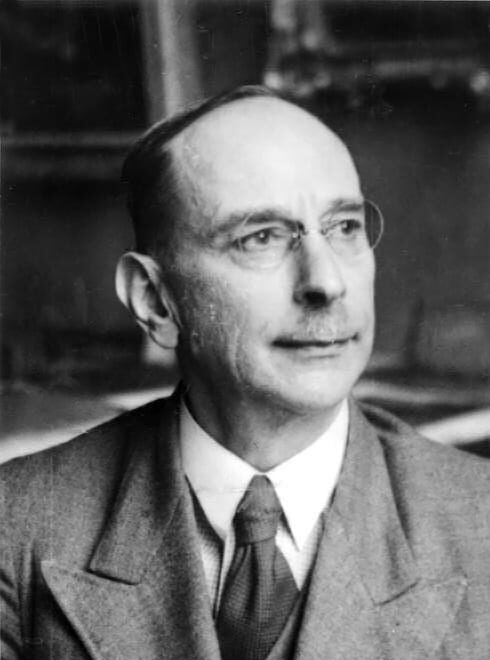
Until his death in 1942, Hans Posse, the long-standing director of the Dresden Picture Gallery, plays a central role in these distribution battles and conceives the Führer Museum. In personal consultation with Adolf Hitler, he decides who receives what.

Germanisches Nationalmuseum, DKA, NL Posse, Hans, I,B-2 (0014)🔍 Move the mouse over the image to enlarge it
n his travel diary, Posse writes on 23 July 1939: "Vienna is to receive some of the French paintings (including the Pompadour by Boucher Fragonard) and all the English paintings. For everything else, Linz is the first priority and Innsbruck the second.“ 'Vienna' refers to the Kunsthistorisches Museum in Vienna, which had been demanding this share from the Jewish collections for some time.

Photograph courtesy of Bettina L. Burr
Alphonse and Clarice von Rothschild are in London with their son Albert at the time of the Anschluss. It is too dangerous for them to travel back to Vienna. But their daughters Bettina and Gwendoline, aged eleven and thirteen, are still there. Their parents instruct them to flee to Switzerland immediately. There they are reunited with their parents and brother. Then tragedy strikes: Albert dies of cancer shortly before his sixteenth birthday.
Because of the German Wehrmacht's advance across Europe, the Rothschilds no longer feel safe and decide to emigrate to the United States. In the summer of 1942, they rent a house in Bar Harbor, a popular holiday resort on the Atlantic coast. Alphonse von Rothschild suffers a heart attack and dies in September 1942.
Forced „dedications“

Austrian National Library Vienna, OEGZ/H10378/4
After the war, the Rothschild family remains in the USA. From there, Clarice von Rothschild applies for the return of her art treasures and real estate. Initially, her application is complicated by the fact that her Viennese properties are located in the area belonging to the Soviet occupation zone. Clarice can invoke her British citizenship and thus her belonging to a nation that is an ally of the Soviet Union. The real estate returned to her. The palace in Theresianumgasse had been so destroyed during the war that it has to be demolished. The artworks are also restituted. Yet, in order to be permitted to export them to the United States, Clarice must pay a high price: she is required to part with over 200 works of art as a ‘dedication’ to Austrian museums. This is because the Republic of Austria invokes the Export Prohibition Act for nationally valuable artefacts.

Bavarian State Painting Collections, on permanent loan from HypoVereinsbank, Member of UniCredit/Photography Elisabeth Greil
Clarice von Rothschild is finally able to bring Boucher's painting to the USA. Decades later, she puts it on the market in New York. The Bayerische Hypotheken- und Wechselbank acquires it in 1971 and permanently loans it to the Alte Pinakothek in Munich, where Madame de Pompadour is the centrepiece of the French section.

Courtesy of National Gallery of Art Archives, Washington. Craig Hugh Smyth Papers - Photographs.
Curiously, the replica of the famous Boucher painting was located just a few steps away at the end of the Second World War. It had been looted from the French branch of the Rothschilds during the German occupation of France. US troops secured it in a depot, took it to the Munich Central Collecting Point and returned it to its rightful owners.

Public domain, via Google Arts&Culture
For a long time, the institutions that profited from the art looting found it legitimate to hold on to the Rothschilds' cultural assets and rejected demands for their return. However, at the end of the 1990s, a shift in thinking began, triggered by the seizure of two paintings by Egon Schiele by the New York District Attorney's Office. The artworks had been loaned to New York from the Leopold Museum in Vienna for a special exhibition, but were suspected of being looted art. As a result, the Austrian Federal Ministry for Education and Cultural Affairs decided to systematically examine collections and archives for looted art.
Even before the Washington Conference on Looted Art, an art restitution law was drafted in Austria, which was passed at the same time as the Washington Principles in late autumn 1998. Since then, numerous works of art have been restituted. The restitution law also includes works of art that were looted from their rightful owners but remained in museums after the war as 'dedications' - a forced donation as a condition for the Jewish refugees to be allowed to take their property abroad.

Merriweather, CC BY-SA 4.0 , via Wikimedia Commons
Thanks to this new legal situation, numerous objects were restituted to the heirs of Clarice and Alphonse von Rothschild. Today, 186 of them can be admired at the Museum of Fine Arts in Boston - donated to the museum by the descendants. Among them are fourteen objects that were intended for the Führer Museum in Linz. A remarkable conclusion to the history of a collection that began in the early 19th century and was torn apart and destroyed by the violent regime of the National Socialists.





