


Almanac okresu Praha 13, 1934
From Prague out into the world
Haberdashery. It sounds old-fashioned. But these small metal objects make everyday life easier for many people: hooks, eyelets, zips, clasps and, above all, the snap button, which is produced industrially using a patented process.

Public domain
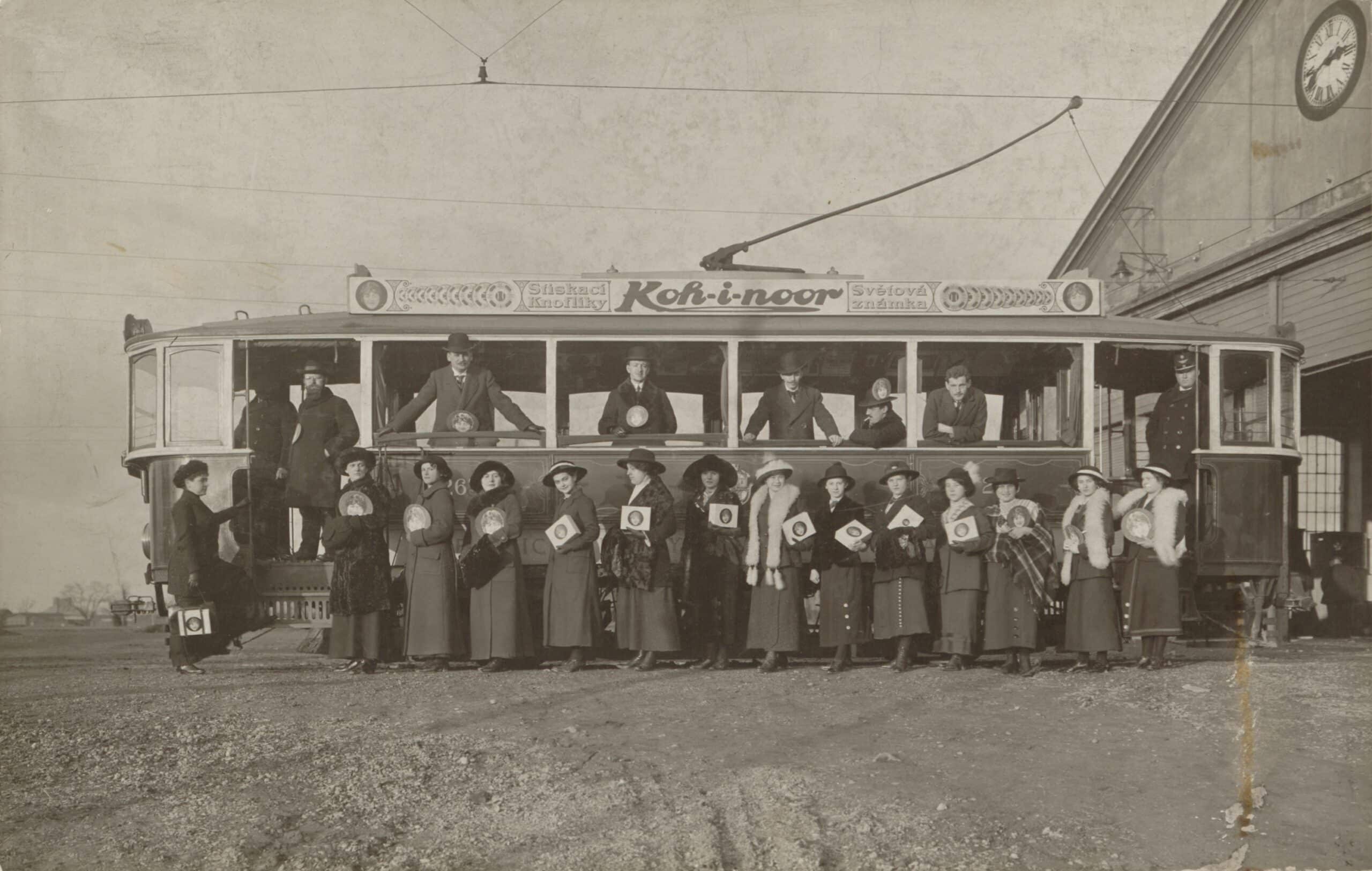
„Koh-i-Noor“ is the name of the snap button, a bold name for a small piece of metal, as it shares its name with the largest diamond in the world, which adorns the British Queen's crown.
Modern marketing
Langhans, Public domain
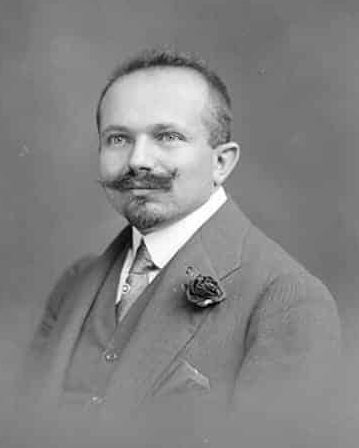
But it's all part of the modern and bold marketing strategy of the company's co-founder, Jindřich (Heinrich, Henry) Waldes. A trained locksmith, he started production in a simple workshop but quickly becomes the world market leader for haberdashery goods.
Public domain, via Wikimedia Commons
Waldes & Ko. successfully implements new marketing strategies, invents a distinctive corporate design and is also progressive in its corporate management. Jindřich Waldes knows how important good, trusting cooperation and the motivation of his employees are for the success of the entire company. In his Prague factory, which opens in 1907, he not only offers his employees a canteen, but also a library and a fitness room and builds them modern company flats.

National Archives in Prague, Public domain
In 1916, he establishes the Waldes Museum, also known as the Button Museum and collect, among others, works by his artist friend František Kupka. Kupka, a pioneer of abstract painting, also creates the well-known motif of the smiling young woman with a button in her eye.
The Waldes company in Dresden, managed by Sigmund Waldes

Almanach okresu Praha 13, 1934.
The Waldes company quickly expanded to the USA, Switzerland, Austria, France, England, Spain and Poland and to Germany, where Sigmund Waldes, the younger brother of the company founder and fourth partner, establishes a branch in Dresden in 1904. He constructs a stately factory there.

df_hauptkatalog_0099451 © Deutsche Fotothek / Unknown photographer
In 1908, Sigmund Waldes marries Ida Hirsch, their son Harry (1909) and daughter Vera (1914) are born. The family moves into a villa at Kaitzer Straße 30 in the southern suburbs of Dresden. Sigmund is now able to expand his collecting activities: He is enthusiastic about contemporary art, collecting works by Corinth, Liebermann, Thoma and expressionist graphic art. He favours artists who work in Dresden or Prague. He repeatedly lends his artworks when he is asked to exhibit them. In an anniversary exhibition in 1929, the Sächsischer Kunstverein shows 17 paintings from the factory owner's collection, including Lovis Corinth's large-format oil painting „Joseph and the Wife of Potiphar“.
Displacement of Jewish businesses

National Archives in Prague, Public domain
When the National Socialists come to power, Sigmund Waldes is forced out of the company due to his Jewish background and is forced to hand over the management of the company in 1938. Desperate, he travels to his brother Jindřich in Prague at the beginning of September 1938. His brother advises him to flee immediately.
Sigmund follows the advice and flees first to Paris, then on to the USA. He is able to take over the management of a family-owned factory there. He dies on Long Island in 1961.

Matejnov, CC BY-SA 4.0 , via Wikimedia Commons
Daughter Vera joins the Resistance
His wife Ida, son Harry and mother-in-law Ernestine also manage to escape to the USA. Their daughter Vera remains in Europe. She joins the Resistance in Paris, where she meets her husband, the Czechoslovakian journalist and resistance fighter Otakar Hromádko.
Persecution and death of company founder Jindřich Waldes


Almanac okresu Praha 13, 1934
His brother Jindřich, on the other hand, can not bring himself to flee for a long time. Although he has the foresight to bring his family to safety, he does not want to leave his company in Prague. In June 1939, he is dismissed as factory director by the National Socialists and arrested shortly afterwards. He is first sent to Dachau concentration camp and then to Buchenwald. His family is able to ransom him for a large sum of money. He wants to emigrate to the USA from Portugal, but dies on the threshold of freedom during a stopover of his passenger ship in Cuba in May 1941.
Plundering the art collection
Meanwhile, the Waldes' Dresden factory is "Aryanised" and the villa becomes an SS office. The art collection is also confiscated. Some parts of the collection are confiscated by the Gestapo as "degenerate" - drawings and prints by leading Expressionists, including Karl Hofer, Otto Kokoschka and Emil Nolde. Another part of the artworks is selected for the "Linz Collection", Hitler's planned Führer Museum.

Federal Archive, Image 146-1968-100-21A / Friedrich Franz Bauer / CC-BY-SA 3.0, CC BY-SA 3.0 EN , via Wikimedia Commons
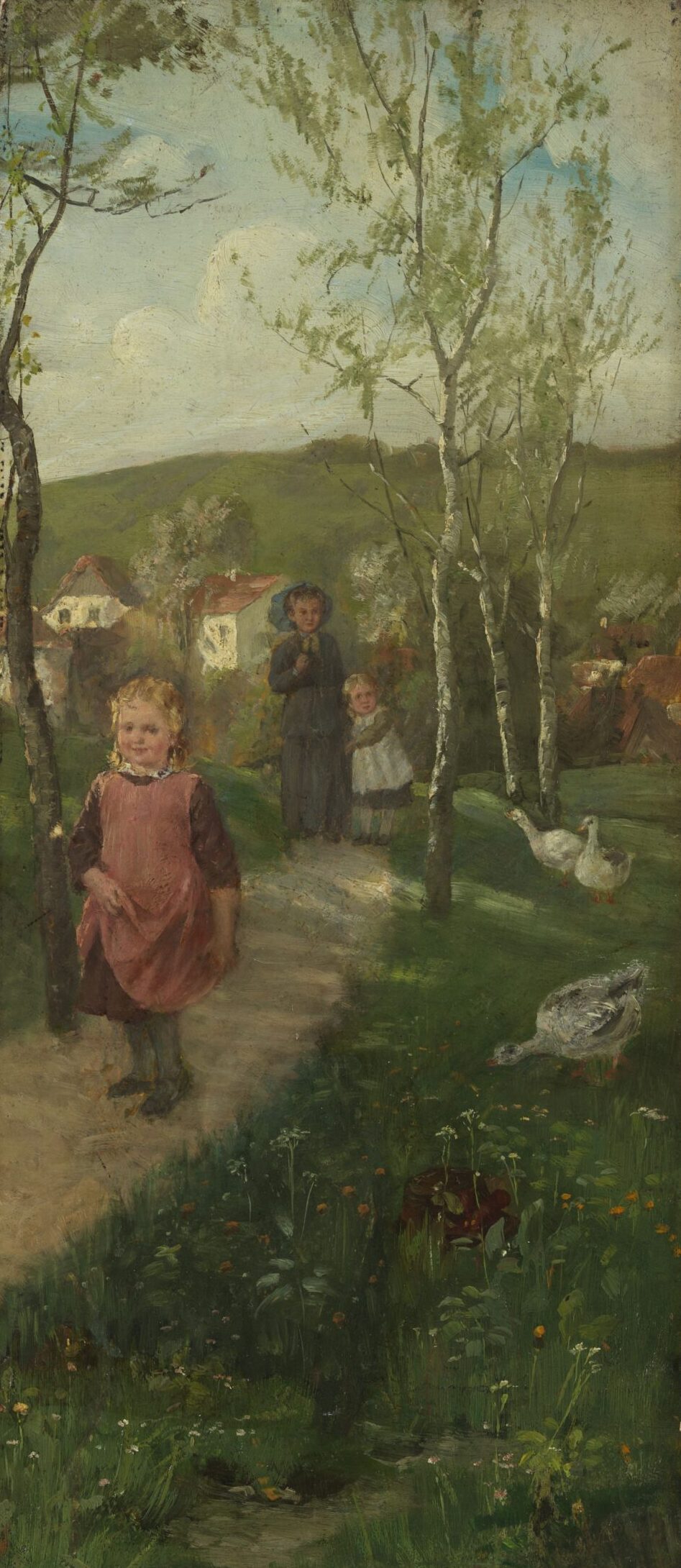
The rest is auctioned off by the Berlin auction house Hans W. Lange on behalf of the Reich Ministry of Economics and in favour of the Deutsche Golddiskontbank. The Munich art dealer Maria Almas-Dietrich, who supplies Hitler and other leading National Socialists with art, often from former Jewish owners, buys the painting "Spring Landscape" by Johann Sperl (1849-1914) at auction. She sells it on to Reichsleiter Martin Bormann, who uses NSDAP funds to acquire hundreds of works of art, primarily to decorate party buildings.

Photo archive at the Central Institute for Art History, Munich
During the Second World War, the Sperl painting and many others are taken to the Altaussee salt mine in Austria to protect them from the bombing raids. There, the American armed forces secure it after the end of the war and bring it to the Central Collecting Point in Munich in October 1945.
Restitution of the looted painting
Bayerische Staatsgemäldesammlungen
As no application for restitution was made for the painting, the Free State of Bavaria was able to transfer ownership of it to itself in accordance with Allied legislation in 1956 and transfer it to the Bavarian State Painting Collections.
In 2019, Harry Waldes' two daughters, who live in the USA, demanded the restitution of the painting through their legal representatives. In close dialogue with the heiresses and the researcher commissioned by them, the provenance research team at the Bavarian State Painting Collections reconstructed the eventful ownership history and confirmed the heiresses' claim. And so, after more than eighty years, the artwork returns to its rightful owners.





