


Galerie Julius Stern: Art trade in an art city

Alamy stock photo
Max Stern grows up in a sheltered environment. With his older sisters Hedi and Gerda, in a house full of art, where relatives and friends come and go. His father, Julius Stern, originally started out in the textile trade, but then shifted to art dealing.
Düsseldorf is a good place for this. The art academy attracts many famous personalities and enjoys an international reputation, there are numerous museums, a lively exhibition programme and many galleries. Königsallee is the city's most elegant boulevard and is home to the Julius Stern Gallery from June 1918.

Düsseldorf City Archive, 5_8_0_005_707_001
Julius is a real self-made man. With courage and skill, he and his wife Selma have establish a flourishing art business. He is popular and well-respected, generously supporting museums not only in his native Düsseldorf, but also in Dresden, Cologne and Berlin.
Encounter with the avant-garde

Pierre Choumoff, Public domain, via Wikimedia Commons
The period of inflation and unemployment after the First World War is difficult for the art trade. Despite this, Julius and Selma Stern allow their son Max to study art history - in Cologne, Bonn, Berlin and Vienna. The professionalisation of his son and business successor is very important to his father, who had entered the art trade as an autodidact. As a reward for completing his doctorate with summa cum laude honours, his parents give him the gift of a stay abroad. Max decides in favour of Paris. There he is introduced to avant-garde art, visits Marc Chagall's studio and becomes fascinated by Amedeo Modigliani, who died young.

Anonymous - National Gallery of Canada, Library and Archives, Fonds Max Stern, Public domain, via Wikimedia Commons
With this beckground, he becomes a partner in his parents' art dealership in 1928. His debut: a successful Spitzweg exhibition. Father Julius hesitantly accepts the junior's wishes to promote modern French art in Düsseldorf.
Elimination of Jewish art dealers
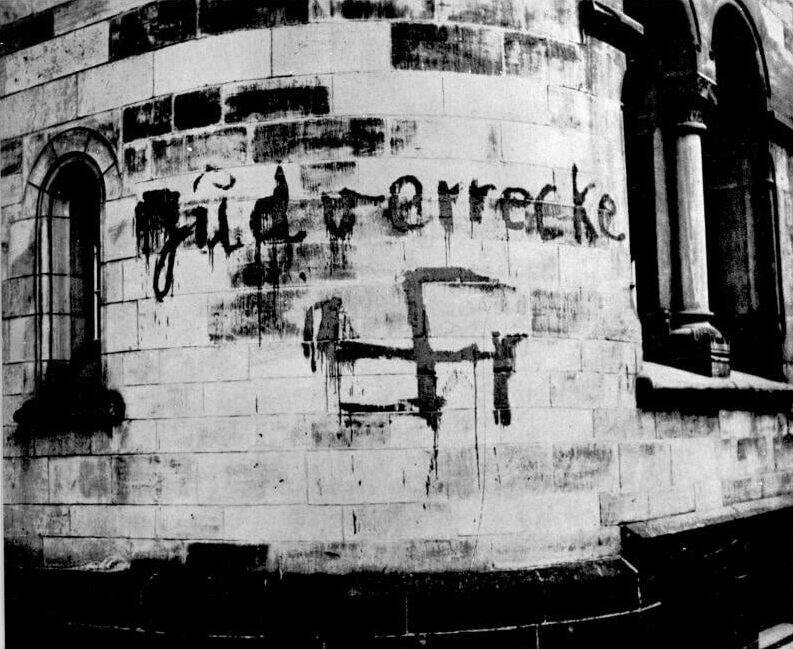
Federal Archives Image Archive Image 183-N0827-322
The attacks against the Stern family begin immediately after the National Socialist's accession to power. Max Stern's sister and her husband, the publicist Siegfried Thalheimer, flee to neutral Saarland in the spring, then on to Paris. Julius Stern is so devastated by the events that he falls seriously ill. He dies in October 1934 and Max takes over the business.

Düsseldorf City Archive, 5_8_0_234_313_002/Julius Söhn
However, the following year, he is ordered by the Reich Chamber of Culture to close his business as part of the elimination of Jewish art dealers. By appealing, Max Stern is able to delay the closure until September 1937. There are still over 200 paintings in the gallery, which Max Stern is forced to auction off in November 1937 at Kunsthaus Lempertz in Cologne, as he has no means of supporting himself in Germany and is being persecuted.
Internment
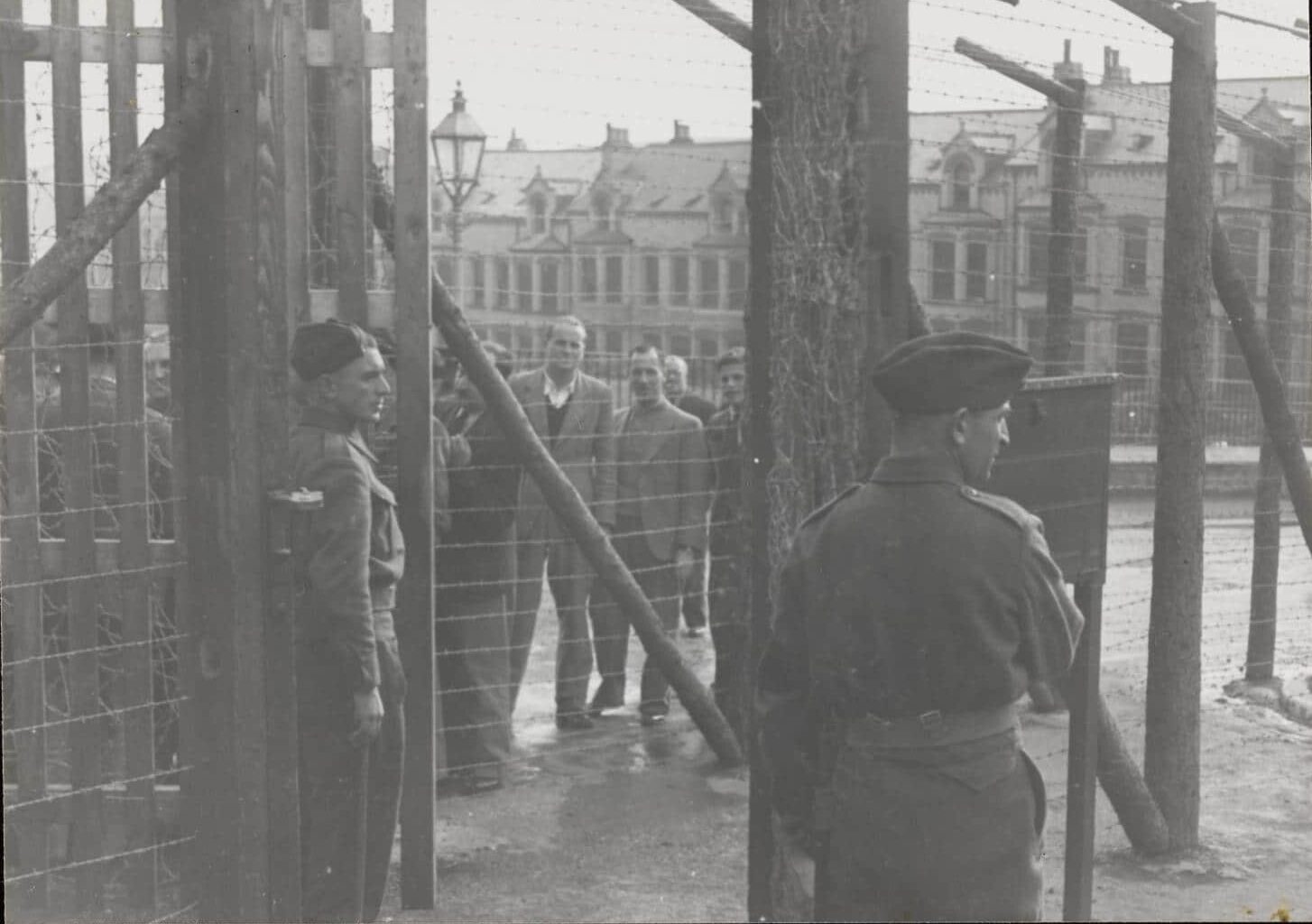
Tate, TGA 20052/2, Major H. O. Daniel, Creative Commons CC BY-NC-ND 4.0 DEED
Max Stern is able to export other collections of paintings from Germany and bring them to London, where he sets up a new gallery, West's Galleries, with his sister Hedwig and his mother Selma.
When the German Luftwaffe begins attacking British cities in 1940, Stern, like many other German and Austrian nationals, is interned by Scotland Yard as an „enemy alien“. On the Isle of Man, off the west coast of England in the Irish Sea. After a few months, Stern volunteers to be transferred to Canada. He cuts down trees in a camp in the province of New Brunswick. In his spare time, he gives lectures on art history to his fellow internees.
A new start in Canada

Jeangagnon, CC BY-SA 4.0 , via Wikimedia Commons
Fortunately, there are dedicated people on the ground who are committed to helping refugees and detained Europeans. One of them is William Birks, who comes from a family of jewellers who have been successful in Montreal for a long time. Birks, an avowed Methodist, criticises Canada's restrictive and anti-Semitic immigration policy. Impressed by Stern's knowledge and energy, he becomes a guarantor for him. As a result, Max Stern is allowed to leave the internment camp in 1941 and move to Montreal.

Public domain, via Wikimedia Commons
He discovers a gap in the Canadian art market: The galleries mainly sell 19th century European artworks, landscapes and genre paintings. But nobody represents contemporary Canadian art. That is until Max Stern arrives on the scene. Within a very short time, he organises exhibitions and helps many Canadian artists, such as the artist Emily Carr and members of the Group of Seven, to gain recognition and launch their careers. Even before the war's end, he curates several exhibitions. Two circumstances work in his favour: due to the war, there are restrictions on transferring large sums of money abroad. So Canadians prefer to buy at home. And at the same time, an unprecedented interest in Canadian art emerges in art history.
William Birks has another beneficial effect on Stern's life: He introduces him to a Swedish immigrant, Iris Westerberg. The two became a couple and marry in 1946. With the financial resources Iris brings into the marriage and the portion of the holdings that Max Stern recovers in 1947 as part of the reparations process, the Sterns acquire the Dominion Gallery. Max and Iris Stern not only promote contemporary Canadian art, but also organise many exhibitions by women artists. With foresight, the Sterns broaden the range of their art dealership, also selling European sculptures in the 1950s, for example by Henry Moore and Auguste Rodin, additionally the first Kandinsky acquired by the Museum of Modern Art in New York also stems from the Dominion Gallery.
Three universities inherit

Public domain, via Wikimedia commons CC BY-SA 3.0
Stern dies in Paris in 1987 at the age of 83. He is a widower, his marriage remained childless. As a result, he names three universities as his heirs: McGill University in Montreal, which his benefactor William Birks had already supported, Concordia University, also in Montreal, and the Hebrew University of Jerusalem.
In 2005, these universities found the Max Stern Art Restitution Project. Their aim is to reconstruct, locate and reclaim the art that was seized from Max Stern as a result of persecution by the Nazi regime. The Max Stern Art Restitution Project estimates that there are approximately 400 works. To date, 250 works of art that were once owned by Stern have been identified.

Bayerische Staatsgemäldesammlungen
IIn 2015, the Holocaust Claims Processing Office (HCPO) contacts the Bavarian State Painting Collections on behalf of the legal successors. The HCPO registered claims to the painting by Hans von Marées, ‘Ulanen auf dem Marsch’ (Uhlans on the March). This painting had been privately owned before being acquired for the Bavarian State Painting Collections at a Munich auction house in 1986.
As various gaps in the provenance cannot be closed beyond doubt, the Bavarian State Painting Collections and the HCPO agree to jointly appeal to the Advisory Commission. This recommends restitution, which takes place in 2022.
Article of the BR about Max Stern
Related links
Max Stern Art Restitution Project →
Press release - Bavarian State Painting Collections →
Une voix féminine dans l'espace public. La Galerie Dominion, 1941-1956 →





