


Staatliche Museen zu Berlin, Nationalgalerie / Jörg P. Anders. Public Domain Mark 1.0 🔍 Hover over image to enlarge
The corner of a village square, painted in bold, broad, brush strokes in muted brown and beige tones. The small number of people are barely distinguishable from the picturesque buildings.
When Camille Pissarro painted this picture in 1867 in a village north of Paris, he was barely able to scrape a living from his art. In 1930, after his death, an exhibition was held in his honor at the Musée de l’Orangerie in Paris on what would have been his 100th birthday. By this point he was considered one of the most significant French painters of his time.
The painting of the village square was among the works on display in this exhibition. It was loaned by Armand Dorville, who had amassed a collection of works by the French Impressionists.
"Under Forced Administration". From the “Provenance Trace” guide in the app of the Alte Nationalgalerie, Berlin. © Staatliche Museen zu Berlin – Preußischer Kulturbesitz
Audio
Listen to the story of the painting
The Paris Bourgeoisie

Ordre des avocats de Paris, Public domain, via Wikimedia Commons
At the time, Dorville was well known in Paris. The newspapers often reported on his successes as an attorney as he regularly represented clients in high-profile court cases. He had the reputation of being particularly eloquent and quick-witted.

bpk / adoc-photos
The Dorville family
Armand Isaac Dorville was born on July 18, 1887 in Paris. He came from a distinguished and influential family.
His father, Léon Albert Dorville, was a banker and ran a Jewish relief organization founded by his own father, Armand’s grandfather. Armand‘s mother, Léonie Monteaux, was from a banking family from Avignon. Armand Dorville had two sisters, Jeanne and Valentine, and a brother, Charles.
War and Peace

Bibliothèque numérique de la Sorbonne, https://nubis.bis-sorbonne.fr/ark:/15733/mjs
Studies and career
After gaining his high school diploma Armand Dorville matriculated at the Faculty of Law in Paris and specialized in trade law. In 1901 he wrote his doctoral thesis, which won a prize. Dorville was subsequently secretary of the Bar Council and established a career in a private law firm.
Federal Archives, picture 183-S27820
Military service
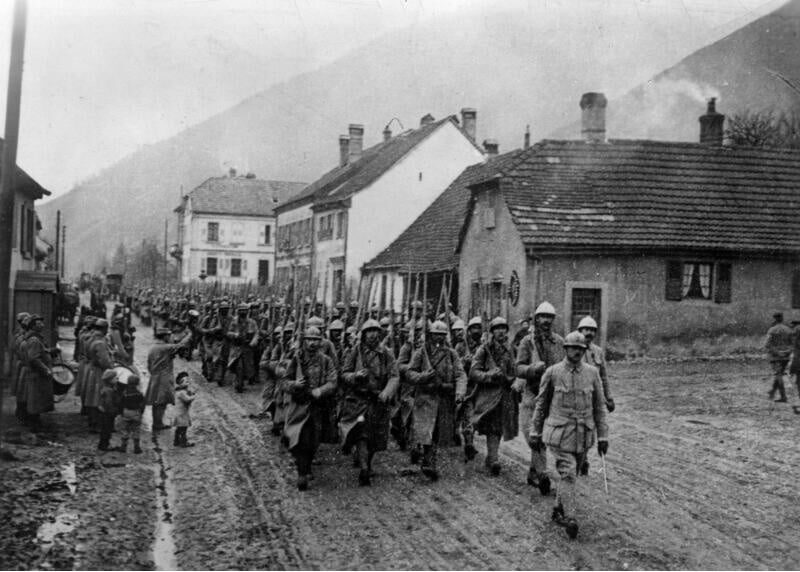
In 1914 Dorville was conscripted for military service. He was wounded at the front near Tournai and taken captive. However, he managed to escape and returned to his regiment. He was promoted several times before the end of World War One and had been made an officer by 1918.

Family collection
A good life
After the war, Dorville returned to his life in Paris. He was successful, committed to social causes, and interested in art and culture. He traveled extensively, for example to Damascus in 1925 and the Soviet Union in 1926. He wrote about his travels in the satirical magazine Le Figaro and in the daily newspaper Le Temps.
Art and Culture

CC BY-SA 4.0, via Wikipedia

Kunstmuseum Bern und Kunst- und Ausstellungshalle der Bundesrepublik Deutschland GmbH / Mick Vincenz 🔍 Hover over image to enlarge

Photo: Carsten Gliese, Cologne 🔍 Hover over image to enlarge
The Impressionist collection
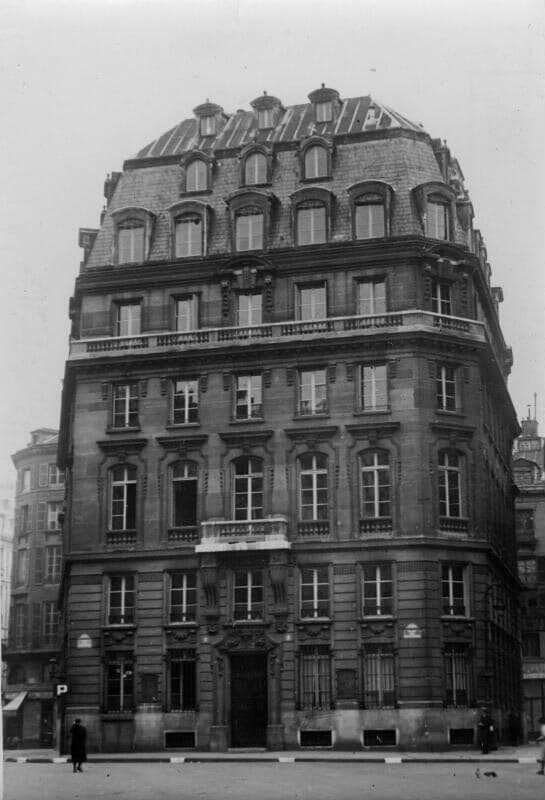
Armand Dorville lived in a town house in rue Édouard-Detaille in Paris. This is where he kept his precious art collection. It included around 450 paintings by famous artists such as Renoir, Manet, Signac, Daumier, Degas, Rodin, and many others.
The collection was known to museums and Dorville was active as a patron and donor. He had particularly close links with the Musée des Arts Décoratifs (Museum of Decorative Arts) in Paris; the museum received a generous bequest after his death.

Miguel Hermoso Cuesta. CC BY-SA 3.0
In addition to painting and the fine arts, Dorville was also interested in books and legal history. He was a member of the “Association des Bibliophiles du Palais” (Bibliophiles Association at the Law Courts) founded in 1923, which devoted itself to particularly rare and valuable books by lawyers and politicians. In 1928 he joined the “Commission des recherches historiques du Barreau de Paris”, a historical research organization within the Paris Bar Association.

Père Igor. CC BY-SA 4.0, via Wikimedia commons

Père Igor. CC BY-SA 4.0, via Wikimedia commons
A country residence steeped in history
Dorville purchased a small chateau in Cubjac, a village in the south of France. The historical property with four round towers dates back to the 13th century.
Escape to the south of France

Federal Archives, Image 101I-126-0350-26A / Heinz Fremke
The German invasion
In 1939 Germany invaded Poland, triggering the start of World War Two. In May 1940 the German army began its western offensive and invaded the Netherlands, Belgium, and France. Within a few weeks these nations had been defeated. In June 1940 German troops entered Paris.
Dorville fled the occupation, taking refuge in his country residence in the south of France.

Eric Gaba / Rama. CC BY-SA 4.0, via Wikimedia commons 🔍 Hover over image to enlarge
The division of France
France was now divided into two zones. The north with the capital Paris was German-occupied. In the south, the town of Vichy became the seat of a new French government. The French initially supported the Vichy government, but it became increasingly authoritarian and aligned itself with the radical far right. It ultimately collaborated with the Hitler regime and introduced measures to persecute foreigners and Jews.

Family collection
Armand Dorville was again in danger, however he died on 28, 1941, at his chateau in Cubjac, before the Vichy regime was able to subject him to persecution.
As he was unmarried and had no children, his three sisters and four nieces were his heirs according to his will.
Under administration
Federal Archives, picture 183-2008-0626-500
Confiscation
In 1942 Dorville’s heirs decided to auction his artworks in Nice. They hoped that this would save them from impending confiscation. The plan did not work. At the last minute the Vichy government placed Dorville’s chateau and his art collection under the control of the “Commissariat général aux question juives” (Commissariat General for Jewish Questions) and installed an administrator.

Bibliothèque de l'Institut national d'histoire de l'art, collections Jacques Doucet, GV/724 🔍 Hover over image to enlarge
Auction in Nice
The administrator arranged for the art collection, the library, and the furniture from the chateau to be auctioned as planned in June 1942 in the “Hall du Savoy” in Nice. The proceeds of the auction were not distributed among the heirs but rather paid into a bank account which the family could not access. Only after the war was the balance paid to the family members who had survived the National Socialist period.
Persecution of the Family

Federal Archives, Image 101I-027-1477-07 / Wolfgang Vennemann
In 1942 the French police began to deport Jews living in the south of France.
Dorville’s relatives lived in great fear. Armand’s sister Valentine Lion, née Dorville, always carried her valuables with her.
“Already while in Grasse, Frau Lion, who was consumed with fear that she and her relatives would be deported, had become accustomed to carrying her jewelry and valuables around with her in a small suitcase, which never left her side.”
Statutory declaration by Juliette Risso, December 12, 1963.


All photos: family collection
Murdered in Auschwitz
From 1940 Valentine and her family changed their place of residence several times in search of safety; they moved from Paris to Cubjac, Lyon, Grasse, and Megève. However, they were ultimately arrested and deported to Auschwitz.
Valentine, two of her daughters and her two granddaughters were murdered in the concentration camp. Her oldest daughter, Marie-Thérèse, one of Armand Dorville’s nieces, was the only one of the family to survive.

Landesarchiv Berlin, B Rep. 25-09-25, No. 312/59, p. 11 f.

Landesarchiv Berlin, B Rep. 25-09-25, No. 312/59, p. 11 f.
The stolen suitcase
After the war, Marie-Thérèse submitted a compensation claim for the clothing and valuable jewelry that were taken from her mother in Auschwitz as her last remaining possessions. The jewelry was in her mother’s little suitcase that she had never let out of her sight. Marie-Thérèse included a drawing of one of the lost items of jewelry with the application.
Restitution and Purchase


Nationalgalerie, Staatliche Museen zu Berlin / Andres Kilger 🔍 Hover over image to enlarge
The painting of the village square, loaned by Armand Dorville to the Pissarro exhibition in Paris in 1930, was auctioned in 1942 in Nice and purchased on the art market in 1961 by the Nationalgalerie (National Gallery) in Berlin. At the time, the provenance of the picture was not an issue, even though there was a label on the back of the painting with the name and address of the former owner: “Dorville, 4 Rue Éduard Detaille”.


SPK / Janine Schmitz/photothek.de
It was not until several decades later that the Nationalgalerie learned that Armand Dorville was from a Jewish family that had been persecuted by the National Socialists and their French collaborators.
The Stiftung Preußischer Kulturbesitz (Prussian Cultural Heritage Foundation) restituted the painting Une Place à la Roche-Guyon to Dorville’s heirs in 2021 and subsequently purchased it by legal means. Today the painting is on display in the Alte Nationalgalerie (Old National Gallery).





